
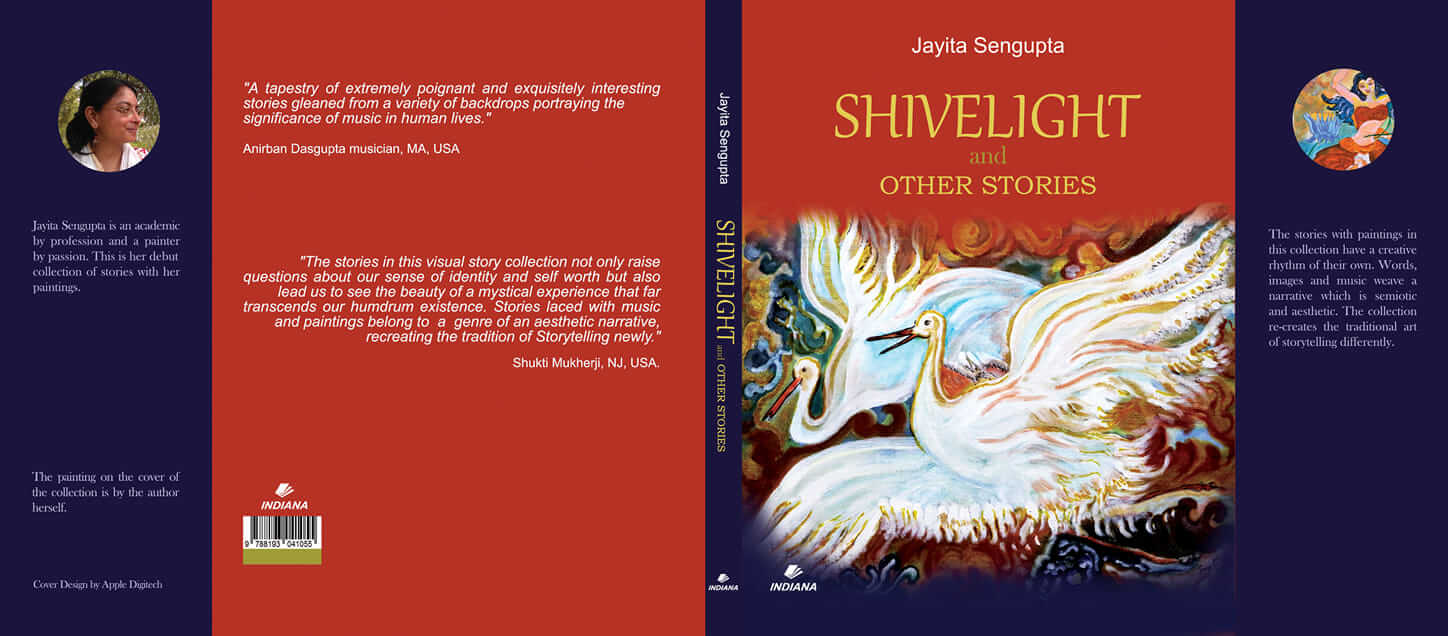

In Shivelight and Other Stories, Jayita talks about the semiotics of resistance through storytelling. It’s from a woman’s perspective. An exclusive for Different Truths.
‘Shivelight’ is the title story of the visual story collection, Shivelight and Other Stories forthcoming from Indiana, Kolkata.
The word “shivelight”, was coined originally by Gerard Manley Hopkins to mean lances of sunshine that pierce the canopy of a forest. For me, “shivelight”, (an intended pun on Shiva’s ‘third eye’ ) is that divine ray of light through a canopy of thoughts, which has the power to create and recreate stories borrowing from images and music in one’s memory.
I have always wanted to tell stories, – not just with words, but with the semiotic slippages between the words, with images, music, and rhythm. I simply loved painting the frames, for ideas to me first come through images and rhythm before they find expression in words. Some of the frames included in the presentation paved the way for the narrative.
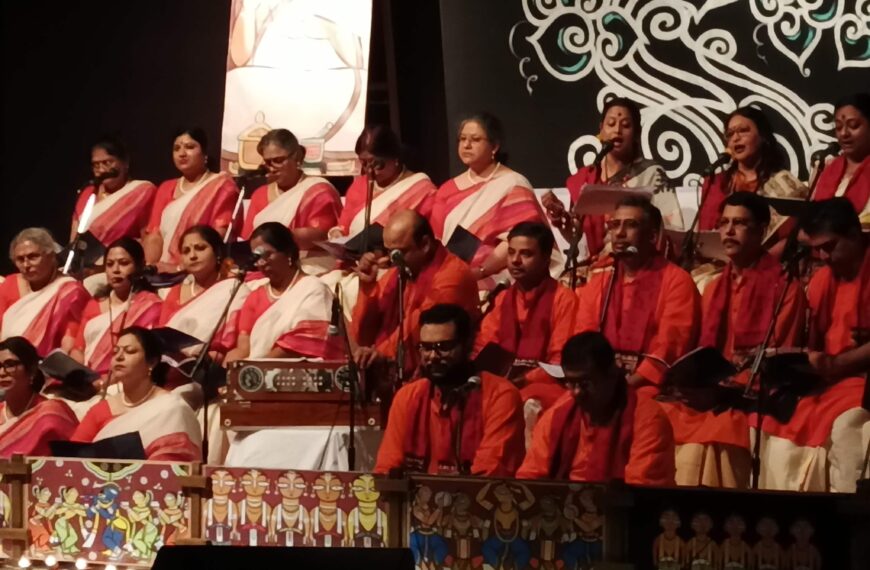
Originally the story was scripted for performance with music, rhythm, and narration in some venues in Mumbai and Kolkata. This led me on to explore the possibility of a new form, which I would phrase as ‘a rhythmic visual narrative’, with my paintings as semiotic significations. The story is from a woman’s perspective.

Originally the story was scripted for performance with music, rhythm, and narration in some venues in Mumbai and Kolkata. This led me on to explore the possibility of a new form, which I would phrase as ‘a rhythmic visual narrative’, with my paintings as semiotic significations. The story is from a woman’s perspective.
My intention here has been to capture the underlying resistance to the patriarchal stasis through the semiotic play of the archetypal image of the ardhanarishwar (Shiva-Parvati) in the eternal dance of creation and destruction of Time. The narrative does not talk about the details of oppression, for it is how oppression affects our lives is important.
My intention here has been to capture the underlying resistance to the patriarchal stasis through the semiotic play of the archetypal image of the ardhanarishwar (Shiva-Parvati) in the eternal dance of creation and destruction of Time.
So, there are paintings of oppression, revolt, and liberation. They create a pattern through different styles of art and myths as underlying forces of the subconscious and superconscious. Ultimately in the face of negatives that have to be accepted and dealt with in life, my intention in such a rhythmic visual narrative has been to capture the divine energy or sonum (Tibetan word for positive energy) that allows an ordinary person to realise her/his connections in the larger scheme of existence, not limited to the humdrum of the fluctuating present.
So, there are paintings of oppression, revolt, and liberation. They create a pattern through different styles of art and myths as underlying forces of the subconscious and superconscious. Ultimately in the face of negatives that have to be accepted and dealt with in life, my intention in such a rhythmic visual narrative has been to capture the divine energy or sonum (Tibetan word for positive energy) that allows an ordinary person to realise her/his connections in the larger scheme of existence…
We live in a society, where moral values need to be re-defined, where conscience is always blackened, where ambitions create hungry, gorging hearts and minds for achieving worldly success. This narrative is to capture the tremors on the earth’s crust, while the lava flows below.
They are a part of a journey that connects lives with lives, stories with stories.
https://www.youtube.com/watch?v=Gs1Ui3YCgsY
Visuals sourced by the author



 By
By
 By
By
 By
By
 By
By
Excellent work by Professor Jayita. She is a creator with a deep sense of tradition.
Thanks so much!
Very interesting interdisciplinary journey both personal and universal
Thank you