


Once you tie the knot, your wardrobe has to announce your marital status. A woman has to be a sari-clad, wearing sindoor and mangalsutra, but men can roam around the house in shorts and tees all their lives. There is no obligation for men to ‘look married’ and ‘sanskari’. Men can go on living their lives, nothing much changes once they are married but the women become ‘ghar ki izzat’ (honour of the family) the moment she steps inside the new home. A woman is treated as a walking, talking platform meant to display her husband’s wealth. The imaginary ‘izzat’ of the house is let down and the family has to face severe embarrassment if a married woman is spotted wearing anything western. The wardrobe of a woman can have a drastic impact on dignity and grace of the entire clan. Nikita asks us to pause and ponder about the discrimination meted out to married women, in the weekly column, exclusively in Different Truths.
Some people believe that dressing modestly is a part of respecting the boundaries of marriage. “You’re married? You do not look like it,” is a phrase women hear even after a decade of being married. Especially in India, women have to look different once they are married. Once you tie the knot, your wardrobe has to announce your marital status.

A woman has to be a sari-clad, wearing sindoor and mangalsutra, but men can roam around the house in shorts and tees all their lives. There is no obligation for men to ‘look married’ and ‘sanskari’. Men can go on living their lives, nothing much changes once they are married but women become ‘ghar ki izzat’ (honour of the family) the moment she steps inside a new home. A woman is treated as a walking, talking platform meant to display her husband’s wealth.
A woman is treated as a walking, talking platform meant to display her husband’s wealth. The imaginary ‘izzat’ of the house is let down and the family has to face severe embarrassment if a married woman is spotted wearing anything western. The wardrobe of a woman can have a drastic impact on dignity and grace of the entire clan.

Imagine a world where men have to wear traditional attires, talk softly, cook delicacies, and make babies. Do you think men would be able to carry on with the weight of the world on their shoulders?
In ancient India, Hindu men and women adorned themselves with exotic jewelries around their bodies. Hindu scriptures talk in detail about how men relished accessorising themselves. Over a period, men  stopped being decorative pieces but women were forced to follow the ancient traditions to keep it alive. It becomes a ‘talk of the town’ if married women decide to wear something un-traditional, they say things like – your husband’s age multiplies if you wear sindoor on your forehead.
Indian women nowadays are financially independent working as CEOs of reputed organisations but nobody can escape the pressure of becoming a sanskari bahu. You could be a miser, destroying families over trivial issues but not wearing body-covering clothes is illegal.
We are teaching our daughters to be independent so that their in-laws can tame  them.
them.
A woman could be earning better than her husband could but she is graded for culinary skills, alone.
“Oh, she has not popped out a baby in five years. There must be something wrong with her.”
“She comes from a family where values were not imparted.”
“She is a disgrace to our family- look at those skinny jeans, who wears those after marriage!”
Sadly, women themselves are carrying forward the tradition of taming other women like cows and buffaloes.

©Nikita Goel
Photos sourced by the author.


 By
By
 By
By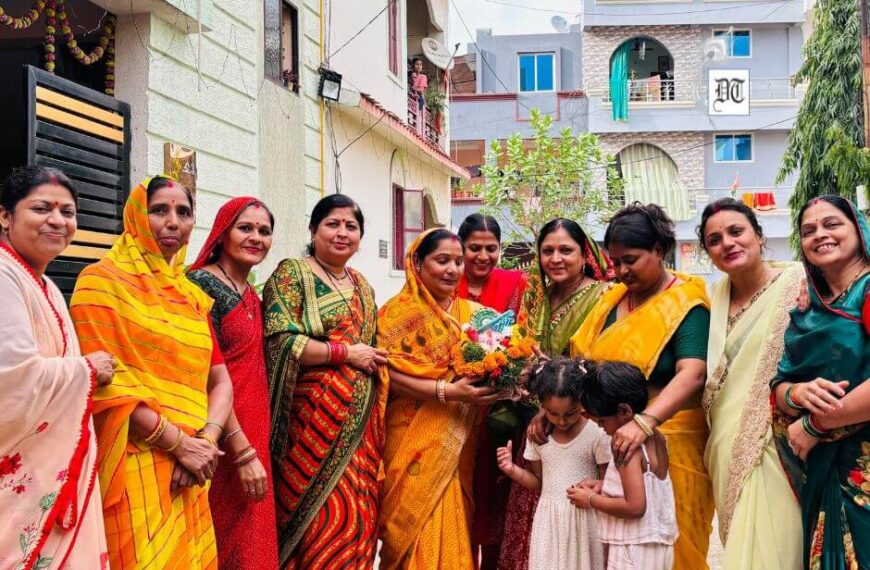
 By
By
 By
By